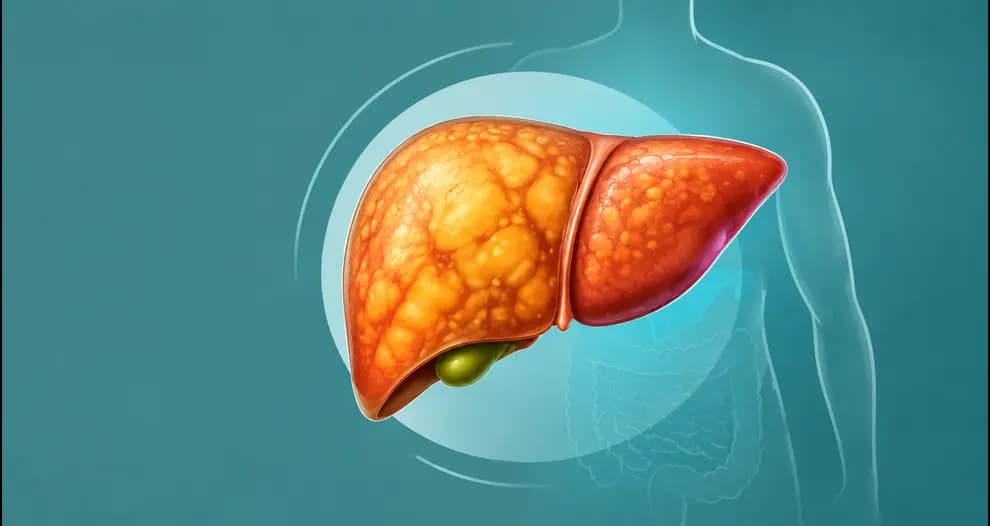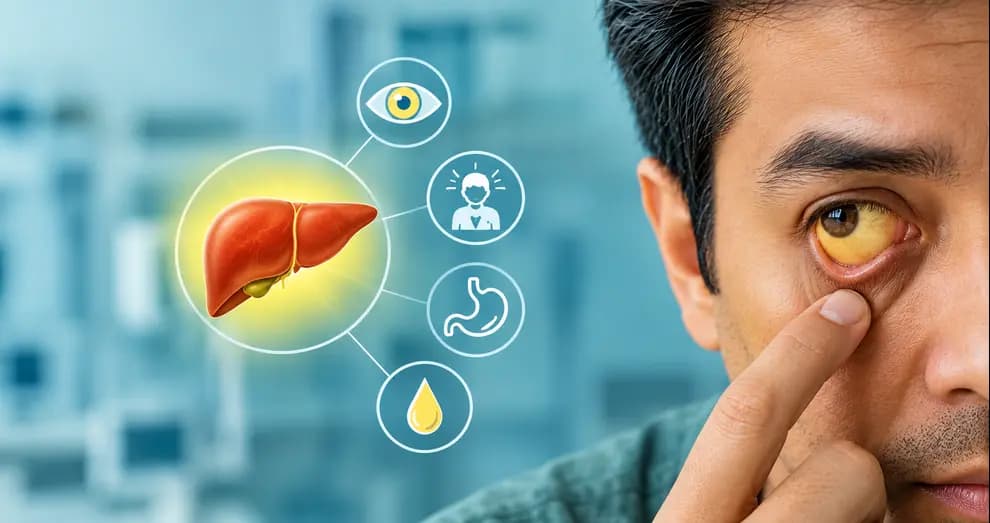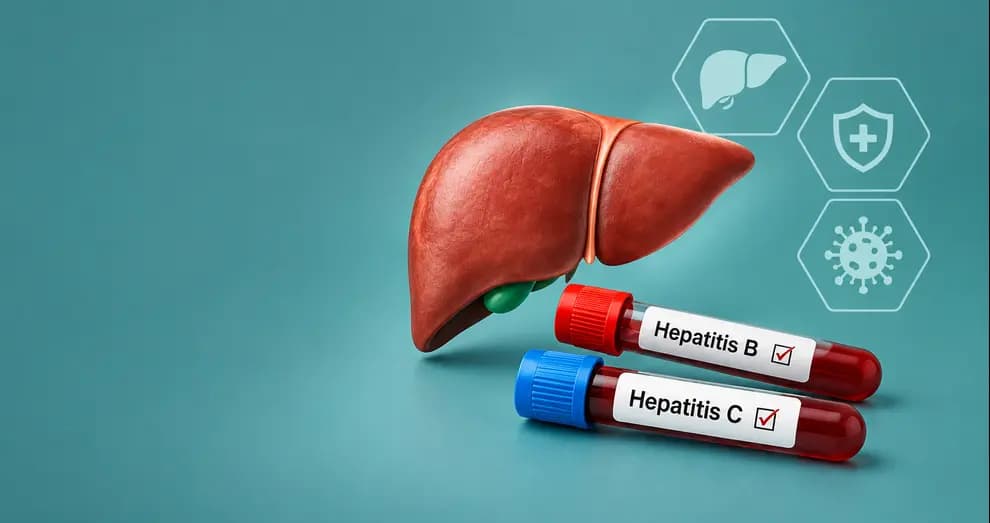

Hepatitis B is a viral infection that affects the liver and spreads through blood and body fluids. Many people with hepatitis B don't know they're infected because they feel fine, which is why screening is so important, especially if you're an immigrant, have lived abroad, or belong to certain at-risk groups. Hepatitis B can sit silently in the liver for decades.
For immigrants, international patients and families with a history of exposure, the first sign of infection is often a routine blood report, or a late diagnosis of cirrhosis or liver cancer.
This guide covers who should be screened, which three tests matter and what to do after a result.
Who Should Be Screened for Hepatitis B?
According to the CDC’s domestic guidance for newly arrived refugees and immigrants, clinicians should screen for chronic hepatitis B in:
- All newly arriving refugees
- Immigrants from regions where HBV prevalence is medium to high (≥2%)
- Adults aged 18 and older
- Pregnant women, during every pregnancy
| Group | Why they are screened |
|---|---|
| Immigrants and refugees from ≥2% prevalence regions | Infection is often acquired in childhood and stays asymptomatic |
| Pregnant women | Allows infant prophylaxis and birth-dose vaccination |
| Household or sexual contacts of HBsAg-positive people | Direct exposure risk |
| People who inject drugs | Blood exposure |
| People living with HIV | Shared transmission routes |
| People in correctional or closed facilities | Higher exposure risk |
Which Regions Count as Medium-to-High Prevalence?
The GOV.UK migrant health guide and the PMC screening paper list these regions:
- Parts of Asia
- Sub-Saharan Africa
- The Pacific Islands
- The Middle East
- Eastern and Southern Europe
- The Caribbean
- Central and South America
If you were born in or lived for long periods in any of these regions, a single blood test gives a clear answer. This applies even if you were vaccinated as a child, because vaccine status is confirmed by antibody levels rather than memory.
Understanding your hepatitis B screening results
The Three-Test Hepatitis B Panel Explained
The CDC recommends a triple-panel serologic test to check for hepatitis B infection, previous exposure and immunity. Testing only for HBsAg is not enough because it cannot show whether you are protected through vaccination or have recovered from a past infection.
The panel includes three tests:
- HBsAg (hepatitis B surface antigen): Detects a current hepatitis B infection. A positive result requires further evaluation to determine whether the infection is acute or chronic.
- Anti-HBs (hepatitis B surface antibody): Indicates immunity from vaccination or recovery from a past infection. A level of 10 mIU/mL or higher is generally considered protective after vaccination.
- Total anti-HBc (hepatitis B core antibody): Indicates past or present exposure to the virus. This antibody develops after natural infection and is not produced by vaccination alone.
Also Read: Hepatitis B vs Hepatitis C: Key Differences and Treatment Approaches


Reading the Results
The combination of all three test results helps doctors determine the next steps:
-
All three tests negative: You are likely susceptible to hepatitis B. Your doctor may recommend starting the hepatitis B vaccine series if you are not already vaccinated.
-
HBsAg negative, anti-HBs positive and total anti-HBc negative: This pattern usually indicates immunity from vaccination. No further action is generally needed if vaccination is complete and no other concerns exist.
-
HBsAg negative, anti-HBs positive and total anti-HBc positive: This usually indicates a past infection that has resolved. Your doctor can explain whether any follow-up is needed.
-
HBsAg positive, anti-HBs negative and total anti-HBc positive: This pattern suggests a current infection. Further testing is needed to determine whether it is acute or chronic and guide treatment.
These patterns are a simplified guide, not a diagnosis. Results such as isolated anti-HBc positivity can have several explanations and require interpretation by a healthcare professional.
What Happens After Your Result
If you test negative for both HBsAg and anti-HBs
You have no protection. The CDC advises completing the full hepatitis B vaccine series. Do not restart vaccination until your antibody status is known, as this avoids unnecessary doses.
If you test positive for HBsAg
Three clinical actions follow, per the CDC guidance:
- Test for hepatitis D (HDV). Use total anti-HDV with reflex to HDV RNA. HDV only occurs alongside HBV and can accelerate liver damage.
- Stage the liver. This usually involves liver function tests, HBV DNA, ultrasound and sometimes elastography.
- Enroll in long-term care. Chronic HBV needs monitoring, surveillance for liver cancer, and antiviral therapy when indicated.
- A positive result is manageable. Many people with chronic HBV live normal lives with regular monitoring, but they must not be lost to follow-up.
Hepatitis B Screening at Rameswara Nursing Home, Kolkata
Rameswara Nursing Home is a NABH-accredited multi-specialty hospital at P-155 C.I.T. Scheme VII-M, near HUDCO More, Ultadanga. It has served patients for over 35 years and has 50+ beds, 24/7 emergency and ambulance support, and in-house pathology, radiology and cardiology.
How a screening visit typically works (confirm exact workflow with the hospital before publishing):
- First contact. Call reception or message on WhatsApp to be directed to the right department. Medicine and Gastroenterology are the usual starting points.
- Consultation. A physician reviews your birthplace, travel history, vaccination records, pregnancy status and family history.
- Blood tests. The HBsAg, anti-HBs and total anti-HBc panel is drawn at the in-house pathology lab.
- Result review. The doctor explains the results using the patterns above.
Next steps. Depending on the result, this means vaccination, HDV testing, ultrasound, or referral to the Gastroenterology department.
Gastroenterology consultants listed on the hospital’s doctor directory include Dr. Debasis Datta, Dr. Deepak Shah, Dr. Soumik Kr. Majhi and Dr. Subhodip Laskar.
If you or a family member fits any group above, book a consultation at Rameswara Nursing Home so a doctor can interpret your results. Chat with our medical assistant team on WhatsApp.
Medical Disclaimer: This article is for general information only and is not medical advice, diagnosis or treatment. Test interpretation, vaccination and treatment decisions must be made by a qualified doctor who knows your history. If you have symptoms such as jaundice, severe fatigue or abdominal swelling, seek medical care promptly.