
Finding blood in your urine without accompanying pain can be unsettling, even though painless bleeding is often less urgent than painful urination. This condition, called hematuria, occurs when blood enters your urinary tract and can range from a sign of something minor to a symptom requiring medical attention. Understanding what painless blood in urine means helps you decide when to seek evaluation and what to expect during diagnosis.
What Painless Blood in Urine Means
Painless blood in your urine, medically termed hematuria, simply means red blood cells are present in amounts visible to the naked eye or detectable only under a microscope. Your urine flows through your kidneys, ureters, bladder, and urethra, any part of this system can bleed without causing pain because the urinary tract lacks pain-sensitive nerve endings in certain regions. Painless bleeding differs significantly from painful urination with blood, which typically suggests infection or inflammation. The key distinction is that your body shows no warning signs like burning, urgency, or discomfort, making you unaware until you notice colour changes in the toilet or during a routine urine test. This absence of pain does not mean the underlying cause is harmless; it only means your body isn't triggering pain signals.
Common Causes of Painless Blood in Urine
The table below summarises the most frequent causes seen in urology practice, from the routine to the serious.
| Cause | Typical Pattern | Why It's Often Painless |
|---|---|---|
| Urinary tract infection (UTI) | More common in women, older adults and children | Not all UTIs cause burning; infection can sometimes show up as blood with few other symptoms |
| Kidney stones | Sudden visible blood, may come and go | A stone that isn't blocking urine flow can bleed without triggering the classic colicky pain |
| Vigorous exercise | Appears after long-distance running or intense training; clears within ~72 hours | Nicknamed “marathon runner's hematuria” — mechanical bleeding, not obstruction |
| Enlarged prostate (BPH) | More common in men over 50 | Fragile surface vessels on an enlarged prostate bleed without pressing on pain-sensitive structures |
| Kidney disease (glomerular conditions) | Often picked up incidentally on a routine urine test | Bleeding happens at the kidney's filtering level, which has no pain receptors |
| Certain medications | Blood thinners, some antibiotics, certain pain relievers | These raise bleeding risk without irritating the urinary tract itself |
| Bladder, kidney or prostate cancer | Painless, visible, may be intermittent | Tumours often bleed from surface vessels long before they grow large enough to cause pain or obstruction |


How Doctors Diagnose the Cause
- History and physical examination: timing, smoking history, medications, family history of kidney disease, recent exercise or trauma
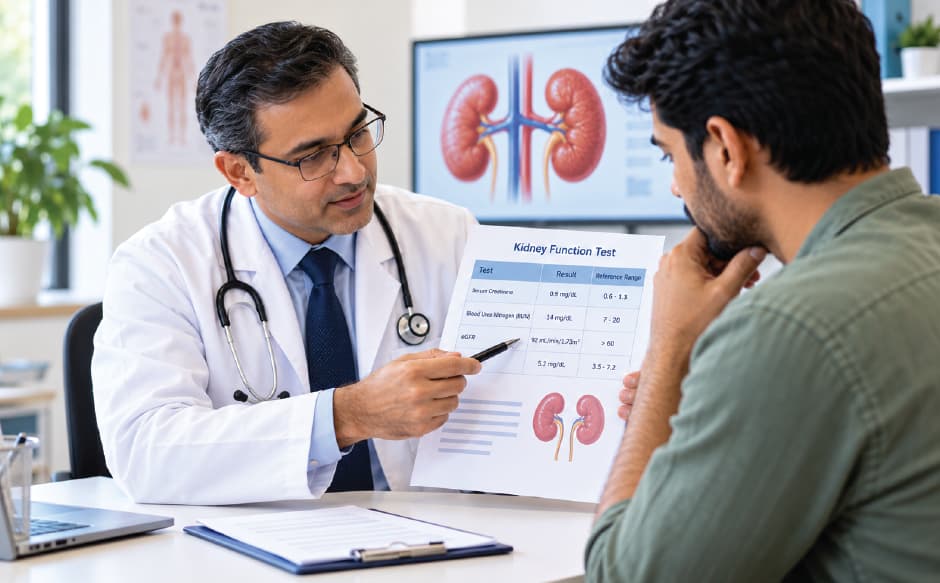
- Urinalysis and urine culture: confirms hematuria, rules out infection, and checks for protein, since hematuria plus protein in urine points toward kidney-level disease
- Urine cytology: checks for abnormal cells shed from the bladder lining
- Imaging: ultrasound of the kidneys, ureters and bladder (KUB) is usually first-line; CT urography is used when more detail is needed
- Cystoscopy: a thin-scope examination of the bladder, typically recommended for adults with visible or persistent blood, especially those over 40 or with risk factors
When every test comes back normal, the finding is called idiopathic microhematuria — blood with no identifiable cause. This is fairly common in younger patients and usually benign, but doctors still recommend periodic follow-up rather than closing the file entirely, since a small number of these cases reveal a cause only over time.
How Rameswara Nursing Home Approaches Painless Blood in Urine
If you're in Kolkata and have noticed blood in your urine with no pain, the most useful first step is a same-day urine test rather than searching for reassurance online.
At Rameswara Nursing Home, a NABH-accredited multi-specialty hospital that has served families in Ultadanga for more than 35 years, painless and visible blood in urine is handled through the Urology & Nephro department. The department has 11 or more senior consultants, including Dr. Kaushik Chandra Mullick, Dr. Nabankar Ghosh and Dr. Priyatosh Dey, with OPD consultations available Monday to Saturday and emergency support around the clock.
What the initial evaluation may include
Instead of sending patients between separate labs and imaging centres, the hospital provides several key diagnostic services under one roof:
- Urine analysis
- Kidney function tests
- Ultrasound (KUB)
- Digital X-ray
- Urology consultation and clinical assessment
This can make the initial evaluation more convenient and help doctors identify whether further investigation is needed.
Support with billing and insurance
The hospital's billing desk works directly with major insurers and TPAs, including Bajaj Allianz, HDFC ERGO and Niva Bupa, for cashless treatment. Its published tariff can also help patients travelling from outside Kolkata, including out-of-state and international patients, plan their expected costs before admission.
What You Can Do While You Wait for Results
- Drink water normally: don't over- or under-hydrate before a urine test, as this can dilute or concentrate results
- Avoid strenuous exercise until the cause is confirmed, especially if recent exertion may be the trigger
- Note the colour, timing and frequency of episodes, this history helps a doctor narrow down causes faster
- Don't stop a prescribed blood thinner or other medication without medical advice, even if you suspect it's the cause
Conclusion
Painless blood in urine sits at an odd intersection: it feels less urgent than a painful symptom, yet in urology it's treated with more caution, not less. Most cases turn out to be UTIs, stones, exercise, or benign kidney conditions, but a meaningful share are the earliest sign of a urologic cancer that is highly treatable when caught this early and considerably harder to treat once it isn't.
The only way to know which category applies to you is a urine test, and ideally an ultrasound, done promptly rather than after weeks of waiting to see if it happens again. If you've noticed blood in your urine with no pain, treat it as a reason to book a urology consultation, not a reason to relax.
If you have noticed blood in your urine and want it checked without the wait, chat with our care assistant on WhatsApp to book a Urology & Nephro consultation.
Medical Disclaimer: This article is for general informational purposes only and is not a substitute for professional medical diagnosis, advice or treatment. Always consult a qualified doctor or urologist for evaluation of blood in urine or any other symptom.