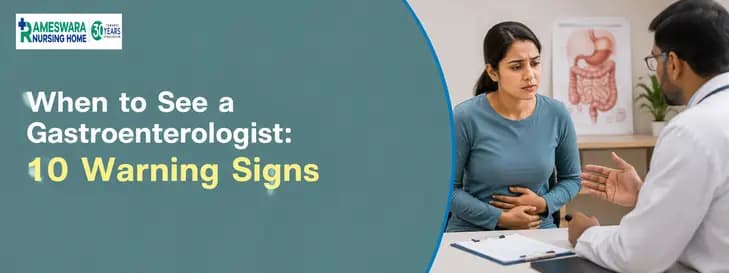

Your digestive system works quietly in the background, but when something goes wrong, it can affect your entire quality of life. Knowing when to consult a gastroenterologist can help you catch problems early and get relief from uncomfortable symptoms. This guide walks you through the key signs that suggest it's time to book an appointment with a specialist.
Introduction: Why Digestive Health Matters
The digestive system is responsible for breaking down food, absorbing nutrients, and eliminating waste. When this complex process encounters problems, symptoms can range from mild discomfort to serious health concerns. Many people tolerate digestive issues for months or even years, thinking they're just part of life. However, persistent symptoms often signal an underlying condition that a gastroenterologist can diagnose and treat. Early intervention not only provides relief but can also prevent complications. A gastroenterologist is a medical doctor who specializes in the anatomy and diseases of the esophagus, stomach, small intestine, colon, liver, pancreas, and biliary system. Understanding when to seek their expertise empowers you to take control of your digestive health and maintain overall wellness.
10 Signs You Should See a Gastroenterologist
Not every stomach ache needs a specialist. But the symptoms below share one thing in common, they are your digestive system telling you something isn’t resolving on its own.
1. Abdominal pain lasting more than two weeks.
Pain that comes and goes for a few days after a heavy meal is common. Pain that persists, wakes you at night, or keeps returning at the same spot needs an evaluation, especially if it’s in the upper right (gallbladder/liver), upper left (stomach/pancreas), or lower right (appendix/bowel) quadrant.
2. Frequent heartburn or acid reflux.
Needing antacids more than twice a week for over a month is no longer “occasional” reflux, it may be GERD, which left untreated can damage the oesophageal lining over years.
3. Unexplained weight loss.
Losing more than 5% of body weight in six to twelve months without dieting or increased exercise is a recognised red flag across gastrointestinal conditions, from malabsorption to inflammatory disease to early cancers.
4. Blood in stool or black, tarry stools.
Bright red blood, dark maroon stool, or black tarry stool (melena) should never be self-diagnosed as “just piles” without an examination, the source of bleeding can be anywhere from the stomach to the rectum.
5. Persistent diarrhea or constipation.
A bowel habit change lasting more than three weeks, not a single stomach bug, warrants investigation for infection, inflammatory bowel disease (IBD), or a structural cause.
6. Difficulty or pain while swallowing.
Food feeling like it’s “sticking” on the way down, or pain with swallowing, points to the oesophagus and should be assessed with an upper GI endoscopy rather than home remedies.
7. Chronic bloating and excessive gas.
Occasional bloating after a heavy meal is normal. Bloating that’s daily, painful, or paired with changed bowel habits can indicate IBS, SIBO (small intestinal bacterial overgrowth), or food intolerance that needs proper testing rather than guesswork.
8. Family history of colorectal cancer, polyps, or IBD.
A first-degree relative (parent, sibling, child) with colorectal cancer or advanced polyps typically means screening should start 10 years before that relative’s age at diagnosis, not at the standard average-risk age.
9. Yellowing of the skin or eyes (jaundice).
Jaundice, especially with dark urine or pale stools, points to a liver, gallbladder, or bile duct problem and needs same-week evaluation.
10. Nausea or vomiting that won’t resolve.
Vomiting that persists beyond a few days, recurs frequently, or comes with abdominal pain and weight loss needs a gastroenterologist’s work-up rather than repeated antiemetics.


Emergency vs. Routine; When to Go to the ER Instead
A handful of symptoms should never wait for an OPD appointment. Go to the nearest emergency room immediately for: vomiting blood or material that looks like coffee grounds; sudden, severe abdominal pain with a rigid or board-like abdomen; black, tarry stools together with dizziness or fainting; high fever with severe abdominal pain; or an inability to keep any fluids down for over 24 hours.
Everything else in this article, persistent but non-acute symptoms, is appropriate for a scheduled gastroenterology OPD consultation.
What Happens During Your First Gastroenterology Consultation
A first visit is rarely straight to a procedure. It typically starts with a detailed history, how long the symptom has lasted, what triggers or relieves it, diet, medication use, alcohol history, and family history, followed by a physical examination.
Based on that, the gastroenterologist decides whether blood work, a stool test, an ultrasound, or a direct visual examination (endoscopy or colonoscopy) is needed. Not every patient needs a scope on day one; many symptoms are narrowed down first with simpler, less invasive tests.
| Symptom | Test Most Often Used | What It Checks |
|---|---|---|
| Persistent heartburn / reflux | Upper GI Endoscopy | Oesophagus and stomach lining |
| Blood in stool | Colonoscopy | Colon and rectum |
| Abdominal pain with jaundice | Ultrasound / MRCP | Liver, gallbladder, bile ducts |
| Chronic diarrhea | Stool test + Colonoscopy | Infection, IBD, malabsorption |
| Difficulty swallowing | Upper GI Endoscopy | Strictures, motility disorders |
| Unexplained weight loss | Blood work + Imaging + Endoscopy | Broad diagnostic screening |
Choosing Gastroenterology Care in Kolkata: What Actually Matters to Patients
If you’re based in Kolkata and have decided a symptom needs a proper look, the next question is usually practical rather than medical: where do you actually go? Most patients weigh the same handful of things, how quickly can I get an appointment, will I need to run between three different labs for tests, and can I afford this without insurance complications getting in the way.
This is where a smaller, established multi-specialty nursing home often works out better than a large corporate hospital for a first gastroenterology consultation. Rameswara Nursing Home, a 35-bed multi-specialty facility in Kankurgachi/Ultadanga, Kolkata, has been treating patients across departments including gastroenterology, general medicine, general surgery and oncology for decades. Its OPD gastroenterology consultants see the same range of complaints covered in this article, persistent reflux, unexplained bowel changes, abdominal pain and patients don’t need to be referred elsewhere for basic diagnostics, since pathology, imaging and OT facilities operate on the same premises.
For patients travelling in from outside Kolkata, two things tend to matter most: a clear, upfront tariff instead of a surprise bill, and a hospital that accepts both cash and cashless/TPA insurance without friction. Rameswara Nursing Home publishes its tariff structure and works with TPAs directly, which is precisely the kind of transparency that turns a stressful “where do I even go” decision into a straightforward one. It won’t be the right fit for every complex case no single hospital is, but for the majority of patients working through the ten warning signs above, it’s a reasonable, well-established place to start.
Conclusion
Most digestive symptoms are minor and settle on their own. But persistent pain, unexplained weight loss, blood in the stool, or a bowel habit that has changed for weeks are not symptoms to manage with home remedies indefinitely, they’re the specific situations a gastroenterologist is trained to investigate.
Acting early rarely costs more than acting late, and in conditions like GERD or colorectal cancer, it can change the entire course of treatment. If any of the ten signs above sound familiar, the next reasonable step isn’t another home remedy search, it’s a consultation.
If you’re still unsure whether what you’re experiencing needs a gastroenterologist, chat with our assistant on the Rameswara Nursing Home website for quick guidance, or book an OPD appointment with our consulting gastroenterology team in Kolkata.
Medical Disclaimer This article is for general informational purposes only and does not constitute medical advice, diagnosis, or treatment. Always seek the advice of a qualified physician or gastroenterologist regarding any medical condition or symptoms you may be experiencing. Never disregard professional medical advice or delay seeking it because of something you have read here.