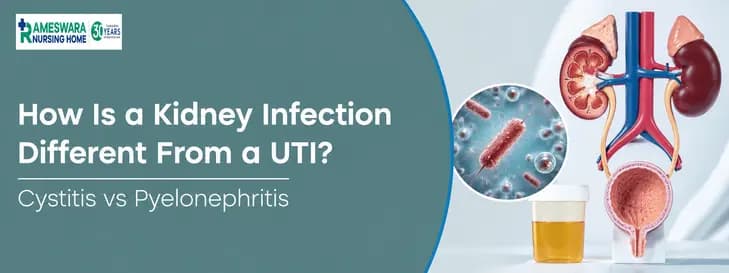

Cystitis is a bladder infection, while pyelonephritis is a kidney infection, both are urinary tract infections but affect different parts of your system. Understanding which one you have is crucial because pyelonephritis is more serious and requires prompt medical attention. This guide explains the differences, symptoms, and when to contact a healthcare provider.
What Is the Main Difference Between Cystitis and Pyelonephritis?
Cystitis is inflammation of the bladder caused by bacterial infection, typically from bacteria entering through the urethra (the tube that carries urine out of your body). Pyelonephritis is inflammation of one or both kidneys, usually caused when bacteria travel upward from the lower urinary tract. The key distinction: cystitis stays in the bladder and is generally less severe, while pyelonephritis reaches the kidneys and is considered a more serious condition requiring urgent care.
Both conditions fall under the umbrella term "urinary tract infection" (UTI), but their severity, symptoms, and treatment intensity differ significantly. Cystitis is the most common type of UTI, especially in women. Recognising which infection you have helps guide your treatment and determines how quickly you need to see a healthcare provider. Most cases of uncomplicated cystitis resolve with appropriate treatment within one to two weeks.
Where Do These Infections Occur in Your Urinary Tract?
Your urinary tract is a system of organs that produces and removes urine from your body. It includes the kidneys, ureters (tubes connecting kidneys to the bladder), bladder, and urethra. Cystitis involves infection of the bladder wall, where urine is stored before it leaves your body. Pyelonephritis involves the kidney tissue itself, which filters waste from your blood to produce urine.
When bacteria enter through the urethra and multiply in the bladder, you develop cystitis. If left untreated or if bacteria travel up the ureters, they can reach the kidneys and cause pyelonephritis. Location matters because kidney infections can damage kidney tissue if not treated promptly, while bladder infections rarely cause lasting damage. Understanding your urinary tract anatomy helps explain why symptoms vary and why kidney infections demand faster intervention.
How Do Symptoms Differ Between Cystitis and Pyelonephritis?
Cystitis typically causes urinary symptoms without systemic signs of illness. You may experience pain or burning during urination, frequent urge to urinate (sometimes 20-40 times daily), urgency to urinate, cloudy or bloody urine, and lower abdominal or pelvic discomfort. Fever is usually absent in uncomplicated cystitis. Pyelonephritis presents more severely: fever (often above 38.5°C), chills, flank pain (pain on the side where your kidney sits), nausea, vomiting, and sometimes fatigue or weakness. You may also have urinary symptoms like those seen in cystitis.
A useful comparison: cystitis feels "local", concentrated in your lower abdomen and during urination, while pyelonephritis feels "systemic" because fever and body aches suggest your whole body is fighting infection. If you experience fever alongside urinary symptoms, especially with flank pain, seek medical attention immediately because kidney infection requires prompt antibiotic treatment. Some people with pyelonephritis feel severely unwell and may need hospital care.
What Causes These Two Infections?
Both cystitis and pyelonephritis result from bacterial infection, most commonly from a bacterium called Escherichia coli (E. coli), which normally lives in your gut without causing harm. In women, bacteria from the rectal area can migrate up the urethra, particularly during sexual activity or due to poor wiping technique after bowel movements. Men are less commonly affected because their urethra is longer, making it harder for bacteria to reach the bladder.
Risk factors for cystitis include female gender, pregnancy, sexual activity, urinary catheter use, incomplete bladder emptying, and certain contraceptive methods. Pyelonephritis often develops when cystitis is left untreated or when anatomical abnormalities obstruct urine flow (such as kidney stones or enlarged prostate in men). Other risk factors include pregnancy, diabetes, weakened immunity, and repeated UTIs. Understanding these causes empowers you to reduce your risk through hydration, hygiene practices, and prompt treatment of lower UTIs before they progress to kidney involvement.


How Are Cystitis and Pyelonephritis Diagnosed?
Diagnosis begins with your medical history and a description of your symptoms. Your healthcare provider will ask about the onset, severity, and associated signs (fever, flank pain, nausea). A urinalysis (urine test) is the primary diagnostic tool, revealing the presence of white blood cells, nitrites, and bacteria, which suggest infection. A urine culture identifies the specific bacterium and its antibiotic sensitivity, guiding targeted treatment.
For pyelonephritis, diagnosis is more urgent and may include blood tests to assess kidney function and blood cultures to detect systemic infection. Imaging studies such as ultrasound or computed tomography (CT) scan may be ordered if complications are suspected, such as abscess formation, kidney stones, or structural abnormalities. At our nephrology and urology centre in Kolkata, we use modern laboratory facilities and imaging technology to differentiate between these infections quickly and accurately. Early and precise diagnosis ensures you receive the right level of care, whether outpatient treatment for cystitis or hospital admission for pyelonephritis.
Treatment Pathways for Cystitis and Pyelonephritis
Cystitis treatment focuses on symptom relief and bacterial eradication. Your doctor prescribes antibiotics (such as fluoroquinolones or nitrofurantoin) chosen based on urine culture results; most courses last three to seven days. You should drink plenty of water to flush your urinary system and take over-the-counter pain relief as directed for discomfort. Most people improve within 24-48 hours of starting antibiotics.
Pyelonephritis requires more intensive treatment. Uncomplicated cases may begin with oral antibiotics and close follow-up, but moderate to severe cases often need hospital admission for intravenous (IV) antibiotics, IV fluids, and careful monitoring. Hospitalisation allows healthcare providers to ensure your kidneys are protected and to watch for complications such as sepsis. Treatment typically lasts 10-14 days total. The difference in approach reflects pyelonephritis's potential to cause lasting kidney damage if not managed promptly and aggressively.
| Aspect | Cystitis | Pyelonephritis |
|---|---|---|
| Primary Location | Bladder | Kidneys |
| Fever | Typically absent | Usually present |
| Antibiotic Route | Oral tablets | Oral or IV |
| Typical Duration | 3-7 days | 10-14 days |
| Hospital Admission | Rarely needed | Often required |
| Urgency | Routine care | Urgent/Emergency |
Why Choose Our Nephrology and Urology Services in Kolkata
At our centre in Kolkata, our specialists, including nephrologists and urologists with extensive training, provide rapid diagnosis and individualised care for urinary tract infections. We understand that urinary symptoms disrupt your daily life, and we prioritise quick assessment and effective treatment. Our nephrology team specialises in kidney health, ensuring that patients with pyelonephritis receive expert monitoring to protect kidney function. Our urology team handles complex cases, including recurrent infections and underlying anatomical issues. We combine clinical experience with modern diagnostic technology, advanced urinalysis, rapid culture systems, and imaging, to confirm your diagnosis within hours rather than days. Our hospital is NABH-accredited, meeting stringent standards for patient safety and care quality. We offer both outpatient management for uncomplicated cystitis and inpatient care for severe pyelonephritis, with 24/7 availability for urgent consultations. When you choose our services, you receive compassionate, evidence-based care informed by the latest urological and nephrological guidelines.
Key Takeaways and When to Seek Care
Cystitis and pyelonephritis are both urinary tract infections, but pyelonephritis is more serious because it affects your kidneys. Understanding the difference helps you recognise when you need prompt medical evaluation. Seek immediate care if you experience fever above 38°C, severe flank pain, nausea, vomiting, or any combination of urinary symptoms with systemic illness signs. For milder symptoms (dysuria, frequency, urgency without fever), contact your doctor within 24 hours for assessment. If you have recurrent infections, incomplete bladder emptying, or a history of pyelonephritis, consult a urologist or nephrologist in Kolkata to identify underlying causes and prevent future episodes. Early intervention, whether for simple cystitis or complicated pyelonephritis, leads to faster recovery and protects your urinary system long-term.